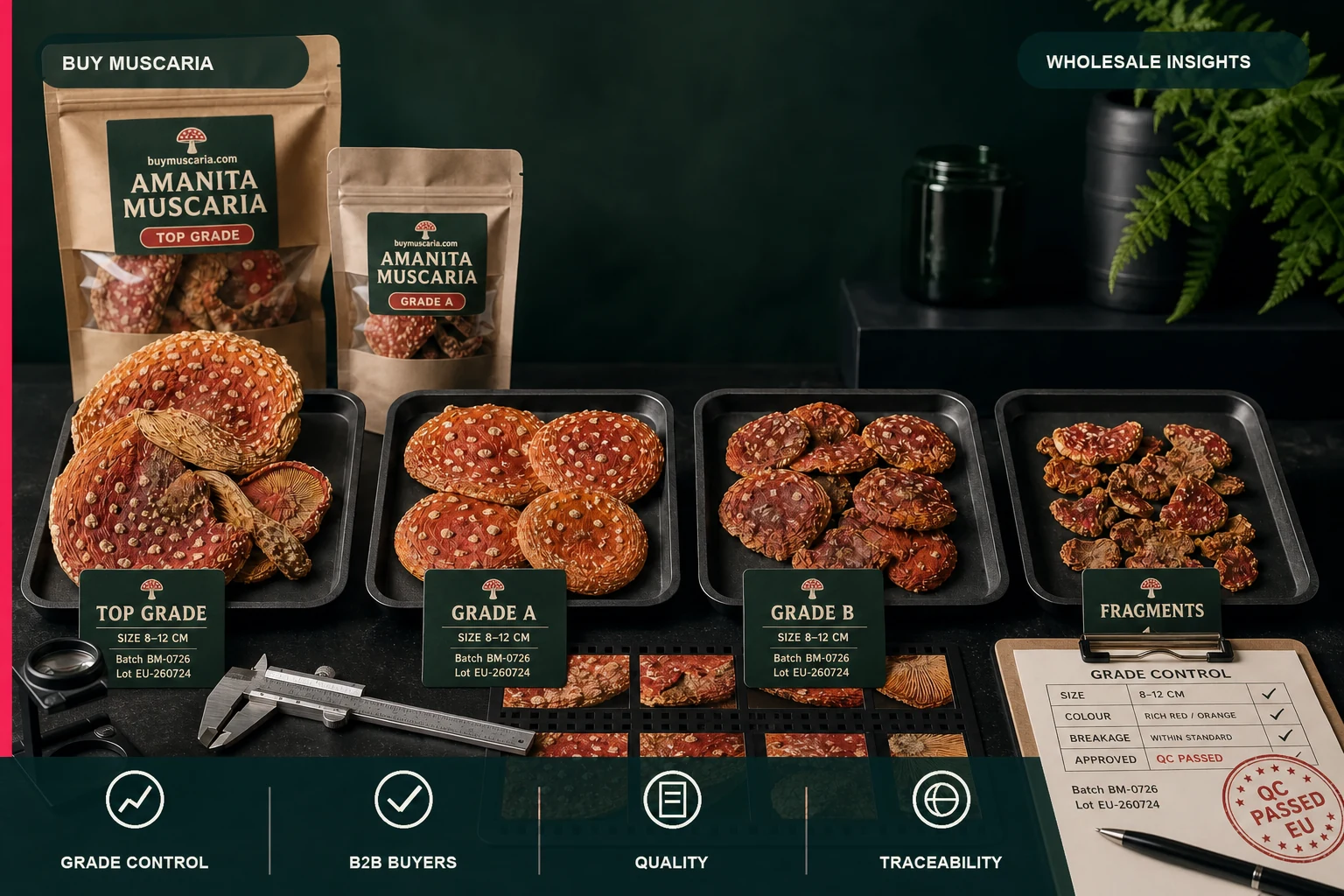
Grade names are useful only when they are tied to a written specification. Terms such as Top, Grade A or Grade B can describe different visual and commercial standards from one supplier to another.
The safest purchasing method is to compare the measurable and visible features behind the label rather than assuming that every supplier uses the same grading system.
Ask what the grade actually controls
A grading specification may cover cap size, colour, percentage of fragments, surface condition, sorting and permitted natural variation. Ask the supplier to explain which characteristics change between grades.
If a feature is important to your customer, put it into the purchase specification. Verbal expectations are difficult to verify after a shipment arrives.
Use photographs as supporting evidence
Current batch photographs help a buyer understand colour and size distribution before ordering. They should support the written specification, not replace it, because lighting and camera settings can change appearance.
Request images of representative material rather than only a few selected pieces. For a large order, a sample provides a more reliable reference point.
Decide how much natural variation is acceptable
Mushrooms are agricultural materials, so some variation is normal. The commercial question is whether that variation remains within the range agreed for the grade and the intended sales channel.
Retail presentation may require tighter visual sorting than a manufacturing process that will grind the material. Paying for a higher visual grade is unnecessary when appearance has no role in the final product.
Separate visual grade from documentation
A visually attractive batch still needs the documentation appropriate to the order and destination. Grade describes the material's commercial presentation; it does not replace batch identification or requested test records.
Review appearance and documentation as two separate approval steps. This makes supplier evaluation clearer and reduces the risk of accepting one strength while overlooking another requirement.
Create an internal receiving checklist
Record the approved sample, photographs, packing details and agreed specification with the purchase order. When the shipment arrives, inspect several cartons rather than only the easiest one to reach.
A repeatable receiving checklist helps purchasing teams communicate objectively and provides useful feedback for the next order.