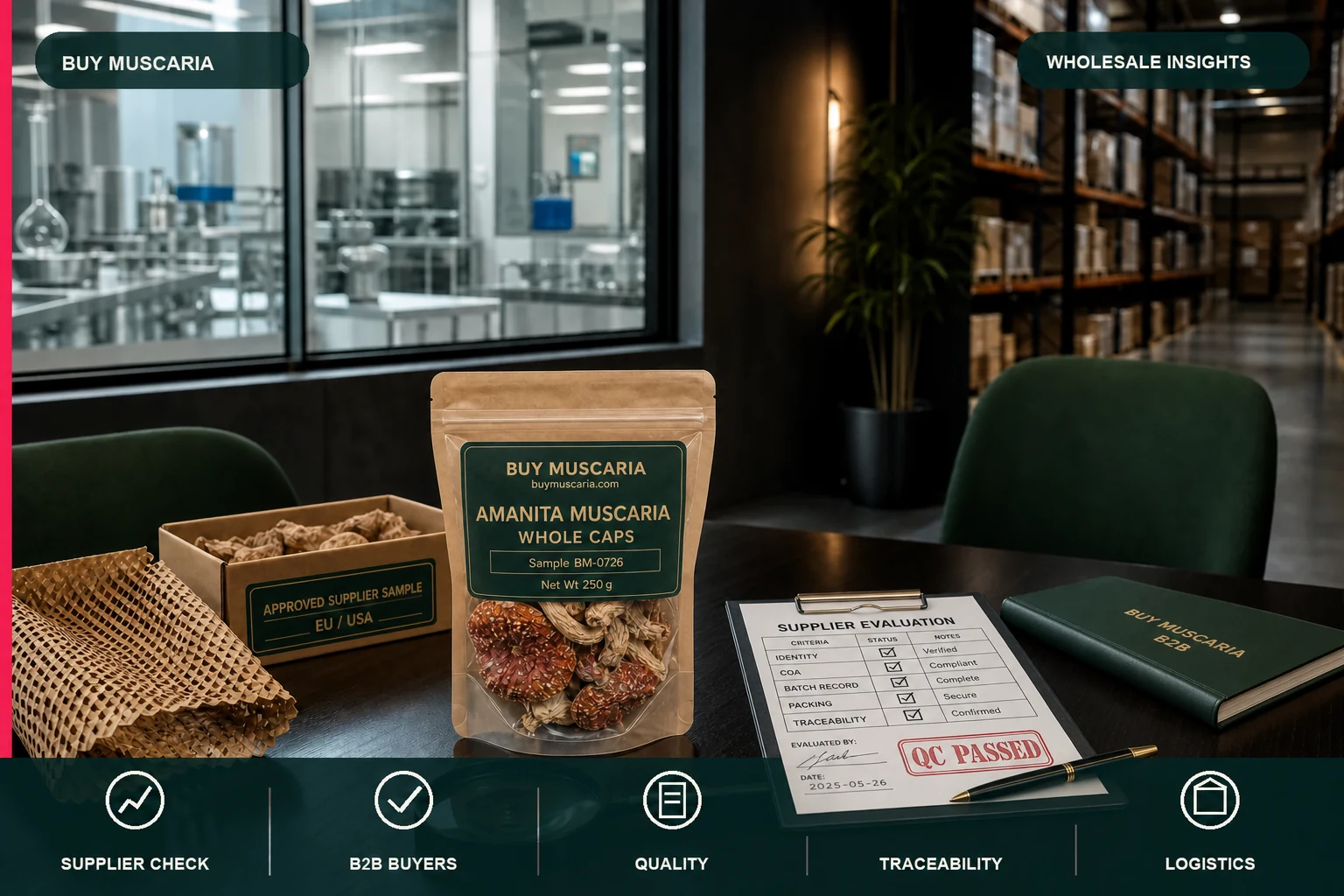
A wholesale supplier should be evaluated as an operating partner, not only as a source of a low price. The quality of communication, records and repeat-order control can affect a buyer long after the first shipment.
A structured scorecard helps purchasing teams compare offers objectively.
Look for specification clarity
A professional supplier should be able to explain format, grade, packing and available documentation without relying on vague quality claims.
Clear written answers show that the offer can be converted into a purchase specification and checked again at receiving.
Assess communication discipline
Notice whether questions are answered completely, whether changes are confirmed in writing and whether realistic lead times are provided.
Fast replies are useful, but accurate and traceable replies are more important for international B2B work.
Review samples in context
Ask whether the sample represents current stock, a standard specification or a custom target. Record the approved characteristics and connect them to the quotation.
If the bulk order will differ, the supplier should explain the difference before the buyer commits.
Check capacity and repeatability
Discuss expected monthly or quarterly demand, not only the first order. The supplier should be transparent about lead time, production planning and how repeat batches are controlled.
A partner that fits a pilot order may not be the right partner for a rapidly growing programme unless capacity and forecasting are addressed early.
Evaluate the whole commercial package
Score product fit, documentation, packing, communication, delivery planning and total landed effort alongside price. Record any assumptions that remain unresolved.
The best supplier is the one whose process matches the buyer's risk level and operating model across repeated orders.